



How To Ship Books Safely: Bubble Mailers Or Boxes?


To work out how to ship books safely, start with the protection each order needs. You can consider bubble mailers when flexible cushioning is sufficient; books that need firm support or must arrive in pristine condition may need rigid mailers or boxes. Choose packaging around the book, its inner protection, and the shipping conditions, then test the complete pack before ordering in bulk.
How to Ship Books Safely: Choose the Right Packaging
Start with the condition you need to deliver. A used paperback and a gift edition may have similar dimensions but different requirements for cover and corner protection. The following table gives you starting points to test, rather than guaranteed matches.
Book or order | Packaging to evaluate | What to confirm |
|---|---|---|
Single paperback with modest protection needs | A correctly sized bubble mailer, with added support if needed | The cover and corners remain adequately protected; the loaded pack closes without strain |
Hardcover or book with vulnerable corners | A rigid book mailer or corrugated box with suitable inner protection | The packaging supports the book and limits movement |
Several books in one order | A corrugated box with individual protection and suitable void fill | Books do not slide against one another or press exposed edges into the outer packaging |
Collectible, signed, or gift edition | A protective box system appropriate to the required condition | Surface, corner, and dust-jacket protection meet the agreed acceptance criteria |
When to Consider Bubble Mailers
A bubble mailer combines an outer surface, cushioning, and a closure in one pack. It can simplify packing when the book does not depend on the outer packaging for rigid support. Check the finished pack with the actual book before treating it as an approved shipping method.
You can assess poly bubble mailers for an appropriate order, but the material name alone does not establish suitability. Adding a board or protective sleeve changes both the space required and the packing process. Include those components in your comparison.
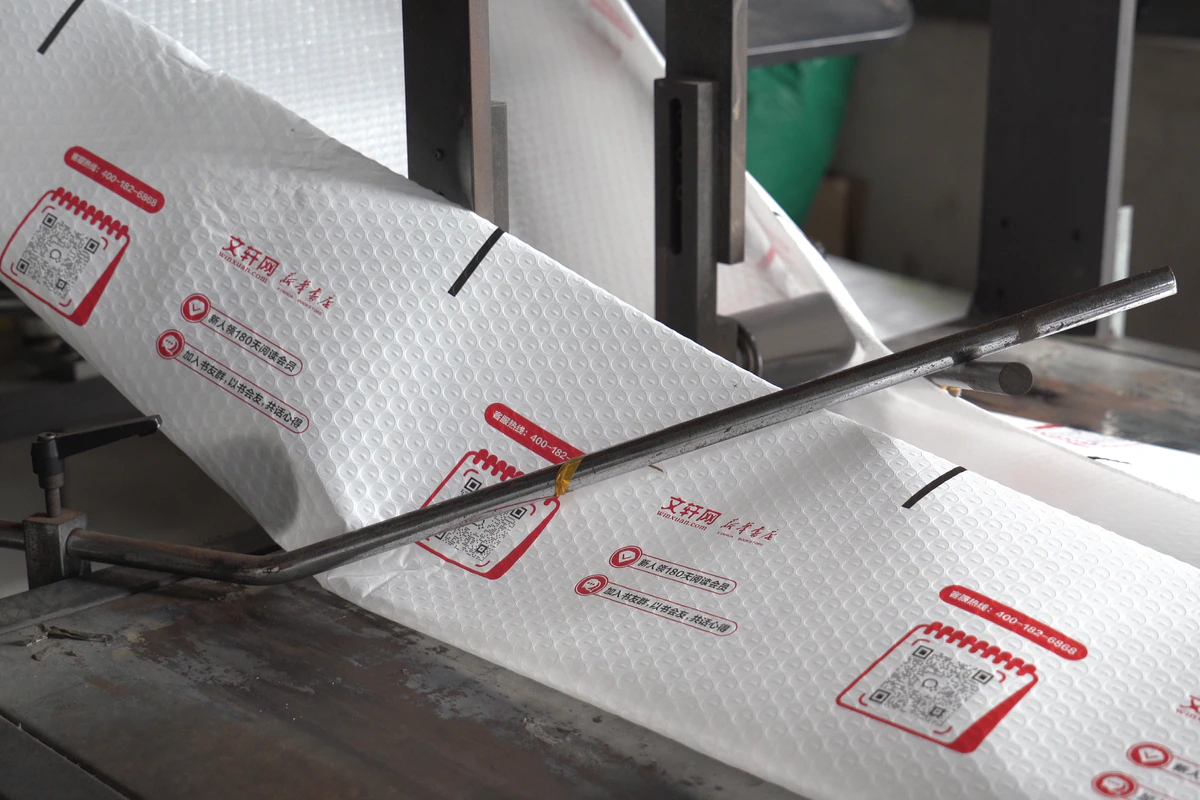
KENT produces bubble mailers for Winxuan (文轩网), a long-standing customer that uses them to mail books. This is a practical example of bubble mailers being used in ongoing book dispatch. If you are considering a similar application, select the dimensions and construction for your own books and inner protection, then confirm the completed pack with samples.
When to Use Rigid Mailers or Corrugated Boxes
Consider a rigid mailer where flat support is important, and a corrugated box where you need space for cushioning, separation, or several books. A hard cover does not remove the need to protect its corners and spine.
For valuable editions, define what counts as unacceptable damage before choosing packaging. A crease that is acceptable on a used reading copy may be unacceptable on a signed gift edition. Our bubble mailers vs boxes comparison explains the broader protection and cost differences.
How Do You Protect Book Covers, Corners, and Spines?
Protect Against Scuffs and Moisture
Choose clean inner wrapping or a suitable protective sleeve, and check its contact with the book's finish. Dust jackets, glossy covers, and decorative surfaces deserve attention during sample packing. Place closures and folds where they will not catch an exposed edge during insertion or unpacking.
Treat moisture protection as a requirement for the complete pack. When reviewing kraft bubble mailers, distinguish the paper exterior from the cushioning inside. Neither a paper appearance nor a plastic outer layer proves that the seams and closure will keep all water out.
If your shipping route requires an additional moisture barrier, include it in the sample pack and confirm that the chosen combination suits the book. Do not describe the finished package as waterproof without supporting evidence.
Add Support Where Bending or Corner Damage Matters
Look at how the book sits inside the packaging. Where a corner or spine presses against an outer wall, review the support and clearance rather than simply choosing a larger bag.
If you add a board, sleeve, or corner protection, check that it stays in place and does not introduce a hard edge against the cover. For books needing firm support, evaluate a rigid mailer or box as a complete alternative.
Evri's book-packaging guide recommends protective wrapping, securing books, and filling gaps, with separate guidance for individual, multiple, and rare books. Use those principles to review your pack; they do not establish that a particular bubble mailer is sufficient.
What Size Packaging Do You Need for Books?
Measure the Book With Its Inner Protection
Record the book's length, width, and thickness. Then measure it again with any sleeve, board, wrapping, or corner protection you intend to use. This second set of measurements describes what must fit inside the packaging.
For a multi-book order, measure the actual protected arrangement rather than adding up bare-book dimensions. Positioning and separation can change the required space. Keep a record of which books and inserts were used so that another packer can repeat the arrangement.
Check Usable Space, the Flap, and the Fit
The following options listed by KENT can give you starting points for selecting book-packaging samples. These are external width × body length measurements; the closure flap is listed separately.
Listed mailer option | External width × body length | Closure flap | Fit check for your book |
|---|---|---|---|
Pearlized Poly Bubble Mailers | 24 × 25 cm | 4 cm | Check a smaller notebook or relatively short book with all inner protection in place |
Kraft Bubble Mailers | 27 × 32 cm | 4 cm | Trial a paperback and its planned protection; confirm thickness and flap reach |
Kraft Bubble Mailers | 35 × 45 cm | 4 cm | Check larger formats needing more space, including support and movement after loading |
Use these as starting points for sample selection. Confirm availability and usable internal dimensions, then test the protected book before choosing a specification.
Ask whether a supplier's listed dimensions refer to external size, usable internal space, or an overall length that includes the flap. Our bubble mailer size guide explains these measurement terms.
Insert the protected book without forcing it. Check the seams, opening, and closure after loading. The flap should reach its intended sealing area without being pulled tightly over an overfilled pack.
A larger package also needs a fit check. Extra space is useful only if the book remains properly supported and secured. Do not use a universal “add one inch” rule for every book and packaging construction.
How Do You Pack One Book or Several Books?
Pack a Single Book
Inspect and record the starting condition. Check the cover, spine, and corners. For orders where appearance matters, a clear photograph can help document the condition before packing.
Apply the planned inner protection. Keep folds and closures clear of vulnerable edges, and secure wrapping to itself.
Load the selected outer package. Confirm that the book and its protection stay aligned during insertion.
Review the loaded fit. Check for unsupported corners, excessive movement, tight seams, and pressure from inserts before sealing.
If the pack needs extra tape simply to hold an overfilled opening together, revisit the size or packaging method. Treat the sample as a chance to correct the specification before you repeat the problem across an order.
Pack Multiple Books Without Shifting
Group the books in the arrangement you intend to ship. Protect individual surfaces and use separation where books could rub or press against one another. Check mismatched sizes carefully: a small book placed against a larger cover can leave parts of the cover unsupported.
Use suitable cushioning or void fill to limit movement inside the box. Avoid forcing extra books into a pack that was selected for a smaller order. The closed box should retain its intended shape, with its flaps meeting normally.
Repeat the check for the combinations you commonly sell. A package that fits two matching books may not work for a textbook and a small paperback.
Seal, Label, and Measure the Finished Parcel
Close the mailer or box according to its packaging instructions. Place the shipping label on a clear, reasonably flat area, and keep the barcode away from folds or closures that could obstruct scanning.
Weigh and measure the completed parcel, including the books, inner protection, outer packaging, and any inserts. USPS package-preparation guidance also calls for suitable packaging, cushioning to prevent shifting, and accurate package measurements. Confirm the selected carrier's current requirements before dispatch.
What Should You Check Before Ordering Book Packaging in Bulk?
Test Your Smallest, Largest, and Most Vulnerable Books
Choose sample orders that represent the range you intend to pack. Include a small book, a large or thick book, and an edition whose corners or finish need particular care. For mixed orders, include the combinations that are hardest to hold securely.
Ask the people who will pack orders to try the proposed method. Record insertion, closure, material use, and the condition after unpacking. Keep the samples and photographs associated with the exact packaging specification.
These checks help you compare fit and handling; they do not establish transport performance. Where the risk warrants it, arrange a suitable packaging test or controlled shipping trial before broad use. Confirm sample availability, charges, and freight arrangements before requesting dispatch.
Record Specifications and Compare Total Packing Cost
Use a record like the one below to make supplier quotations comparable. Fill it with your own measurements and observations.
Record | What to enter |
|---|---|
Book or order reference | Edition or SKU, quantity, and required arrival condition |
Protected dimensions | Length, width, and thickness after adding inner protection |
Outer packaging | Type, usable dimensions, material construction, and closure |
Additional materials | Boards, sleeves, separators, cushioning, and quantities used |
Completed parcel | Measured weight and external dimensions |
Packing observations | Time required, fit problems, closure issues, and unpacking findings |
Order requirements | Quantity, printing needs, packing configuration, and destination |
Compare the cost of the complete method: outer packaging, inserts, packing labor, storage, and quoted transport. Use your own records when considering returns or damage costs. A cheaper empty mailer may require extra components or handling that change the comparison.
If stock sizes leave you with an awkward fit, review custom packaging options after testing the required dimensions and closure. Confirm the specification, order quantity, printing requirements, and quotation before production. Keep an approved sample or agreed specification for repeat orders.
Frequently Asked Questions
Can I Reuse a Bubble Mailer to Ship a Book?
Only if its cushioning, seams and closure remain fit for the shipment.
Does Writing “Do Not Bend” Replace Protective Packaging?
No. A handling label cannot provide physical support or cushioning.
Can I Put Tape Directly on a Book Cover?
No. Keep adhesive on the wrapping, away from the cover and pages.
Do I Need a New Packaging Size for Every Book?
No. Group similar books, then test each pack size with its inserts.
Can I Use the Same Packaging for Domestic and International Orders?
Possibly. Check route, handling and carrier requirements before use.
Final Thoughts
Choose book packaging around the condition you need to deliver, then confirm the fit with the actual book and its protection. A lower empty-package price is useful only when the complete pack suits the order. Send KENT your book dimensions, protection requirements, expected quantity and destination to discuss suitable mailer samples before you commit to a bulk specification.

Metallic vs Poly Bubble Mailers for Branded Shipping
How To Ship Books Safely: Bubble Mailers Or Boxes?

